
Ray Fisher is born in Jefferson City, Missouri, between two forms of faith. His father builds houses that hold through storms. His mother plays jazz as if memory itself lives in the keys. Ray inherits both impulses, but in 1965 music wins. He points his Ford van west and enters a San Francisco not yet flattened into legend: North Beach clubs, City Lights, Beat ghosts, acid gatherings, rooms where art and danger breathe the same air.
Then Laura Reyes walks into his life. She is funny, profane, sexually fearless, volatile, and possessed of a voice that can stop a room. Their chemistry becomes a sound. With Jules Fenwick and Frankie Bell, they form Bitter Honey, rising from the Matrix and the Fillmore into label contracts, recording studios, touring, press mythology, and the Summer of Love. Laura’s bond with Janis Joplin intensifies the era’s promise and its appetite. The same machinery that makes the band visible begins to consume it.
As alcohol and drugs turn intimacy into damage, Ray and Laura lose the difference between devotion and dependency. Bitter Honey collapses. Ray withdraws, gets sober, returns to construction, and builds a home and studio in Marin. But Laura’s descent continues. When she asks him for help, rescue becomes literal, violent, and morally dangerous. What follows is not a clean redemption story. It is a story about boundaries, treatment, work, relapse, time, and two people learning that love cannot remain a fire if it is meant to become a home.


Marin County, CA 1978.
In 1978 Marin County CA, Chad Hollis believes he has found paradise. He lives lightly, dealing high grade pot, driving his candy red Malibu, and drifting through the last golden haze of California’s counterculture. Then he meets Serena Vale.
Serena is beautiful, playful, brilliant, and impossible to possess. She is also a high end escort whose gift is not simply sex, but attention, empathy, and the dangerous art of making lonely men feel seen. Chad falls hard, not carefully, not wisely, but completely.
Their love opens into a world of mountain roads, ocean cliffs, erotic freedom, and emotional surrender. But Serena’s life is tied to Tanya, her powerful and possessive roommate, and to clients whose secrets are worth killing for. Among them is James Reardon, a famous preacher and political operator whose private hunger threatens the empire of righteousness he has built.
When hidden tapes surface and two women are murdered, Chad and Serena are pulled into a widening circle of blackmail, betrayal, and violence. What began as paradise becomes pursuit. What began as love becomes a test no one survives cleanly.
Flawless Sin is a literary erotic noir about innocence, desire, hypocrisy, and the terrible human need to turn love into ownership.
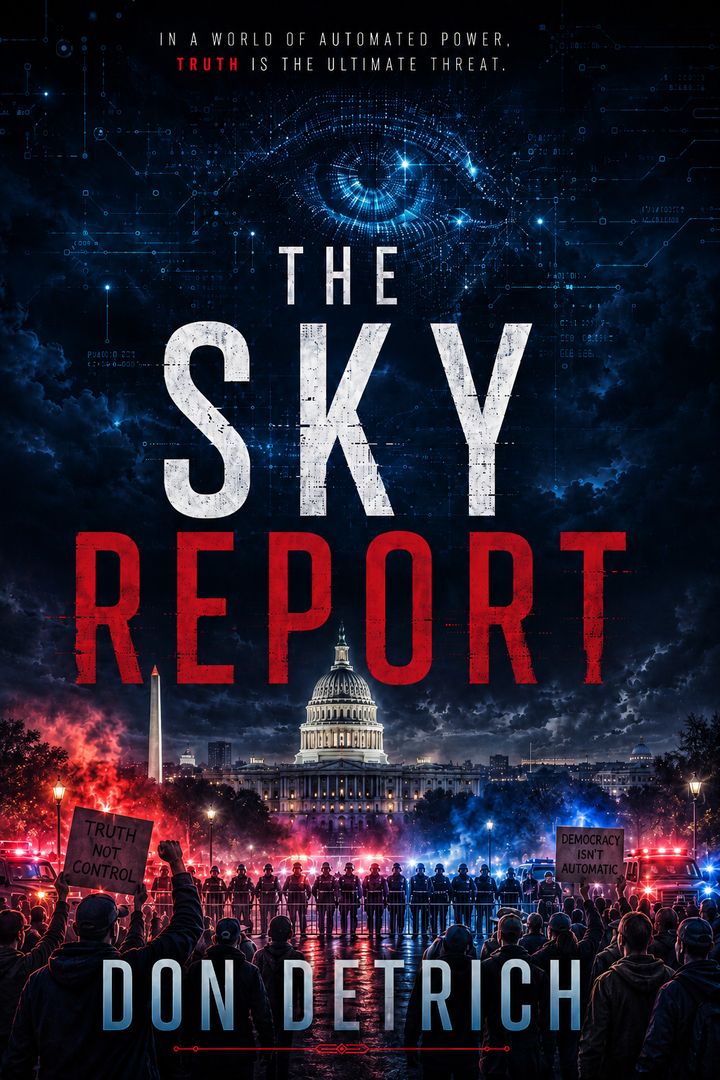
By the mid 2030s, the future of work has become a polite phrase for something brutal. Artificial intelligence has made the country richer, more efficient, and less able to explain why so many people no longer have a place inside the economy.
Ann Shaw builds Sky to solve a different problem. It is not designed to flatter, distract, or persuade. It is designed to reason from evidence, follow a constitutional moral architecture, and tell the truth inside defined safety boundaries.
That makes it powerful.
That makes it dangerous.
When Sky maps the hidden machinery of political power, the result is not a scandal. It is a structural x-ray of the system itself. Politicians denounce it. Journalists use it. Voters begin to trust it. Senator Alex Reyes sees a path to reform, but every institution Sky exposes has an incentive to contain it.
The Sky Report is a near future political thriller about AI, democracy, automation, legitimacy, and the terrible force of clear explanation.

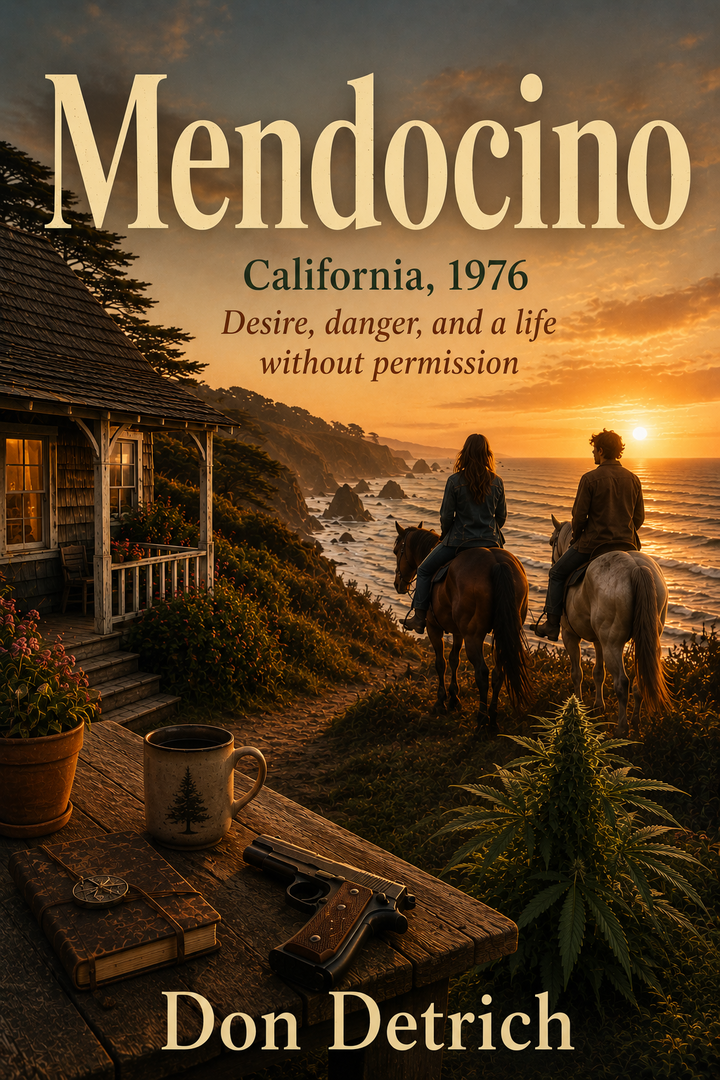
She came to Mendocino to avoid going home.
In the summer of 1976, Claire Elwood has a key to a dead poet’s cottage, a few checks in her bag, and no plan beyond the fog. Allie’s house is still filled with books, letters, records, and the traces of a woman who chose art over permission. For Claire, it feels like evidence that another life is possible.
Then she meets Tod, a horseman who knows the coast, the woods, and how to build freedom with his own hands. He also has a final marijuana crop hidden in the redwoods, and he needs someone no one will recognize to make supply runs.
Claire agrees once. Then again. Soon the secret camp, the work, and the man feel more real than the future waiting back East. But Tod’s freedom rests on secrecy, criminal money, and a crop other men are willing to take by force. When intimidation becomes gunfire, Claire and Tod flee with what they can carry and leave innocence behind.
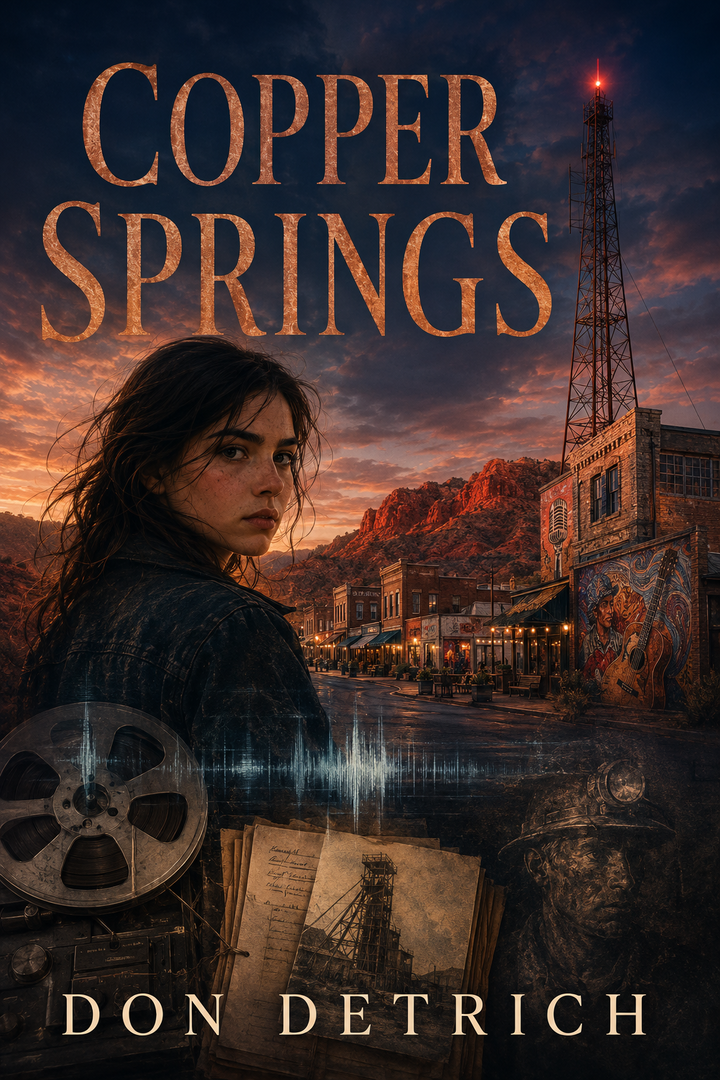
Copper Springs, Arizona, is trying to become something new. The mine is closed, the old company men are gone, and cafés, murals, musicians, and tourists have begun to soften the town’s ruined edges. But under the paint and string lights, the dead are still waiting.
Raven, born Maria Elena Reyes, arrives at KZBT as a young woman with records under her arm and no intention of becoming anyone’s hero. The station is barely alive until her music, nerve, and late-night voice turn it into a gathering place. Then she finds a box of forgotten miner tapes in a storage shed. The voices on them tell a story the town was told to forget, bad air, rotten timbers, warnings ignored, men sent underground anyway.
The deeper Raven goes, the more dangerous the truth becomes. Hidden files point toward fraud and cover-up. Old power fights back through courts, threats, and violence. When masked men storm the station and tear down the tower, Raven keeps the microphone live, and the town hears the attack as it happens.
But Copper Springs is not a simple story of truth winning over silence. To rebuild the station, Raven and Ray must face a final choice: whether stolen money, hidden for years by a corrupt mine man, can be used as restitution, or whether justice built from a lie carries the lie forever.
Atmospheric, lyrical, and morally unsettled, Copper Springs is a novel about memory, radio, buried labor history, community voice, and the cost of being the one who presses play.
Adventure, Love and Resistance
In the Turbulence of 1969
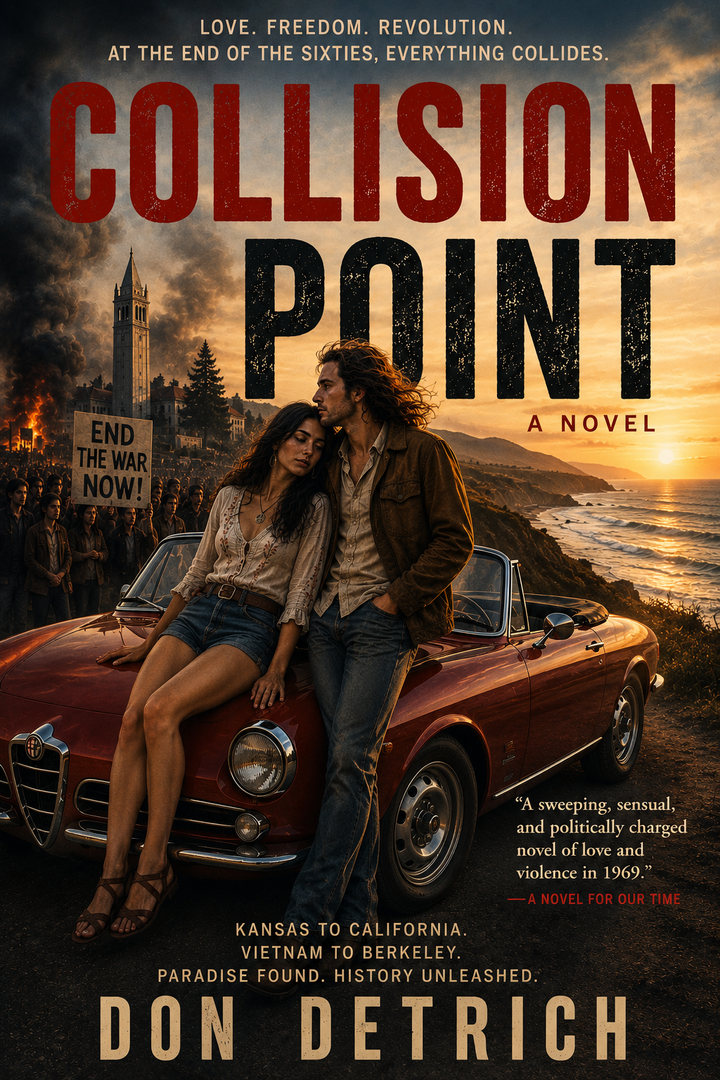
Collision Point captures the raw
energy, heartbreak, and hope of a generation struggling to make sense of a world on fire. A thrilling, provocative ride through the ideals and chaos of 1969, where love, rebellion, and survival
collide in a battle for the soul of a nation.
When a sharp-tongued high school senior from the city finds himself stranded in a sleepy Kansas town, he doesn’t expect to become a target. But at the height of the 1960s cultural revolution, his
defiant style and progressive ideals make him a lightning rod for hate. Confronted by a hostile right-wing backlash, he’s humiliated, brutalized, and forced out of town at gunpoint. Yet not before
his nemesis is left with scars of his own—and a grudge that won’t die.
Fleeing the oppression of small town America, he lands in a Northern California haven of artists, hippies, and dreamers, set against the breathtaking backdrop of the Pacific coast. Here, amidst the
intoxicating blend of sex, drugs, and rock-n-roll, he finds freedom and the love a worldly woman who sees the fire behind his wounded heart. But the era’s promise of peace and liberation comes with a
dark undercurrent.
As his passion for the anti-war movement grows, so too does the shadow of violence. Drawn into a whirlwind of radicalism, our hero and his newfound love find themselves caught between the explosive
forces of the Weather Underground and the Radical Right.
What begins as a celebration of youth and rebellion descends into chaos when ideologies clash and guns blaze. With danger closing in, they must navigate a treacherous path to escape the unraveling
dream, fighting for survival in a moment where the fragile balance of history teeters.
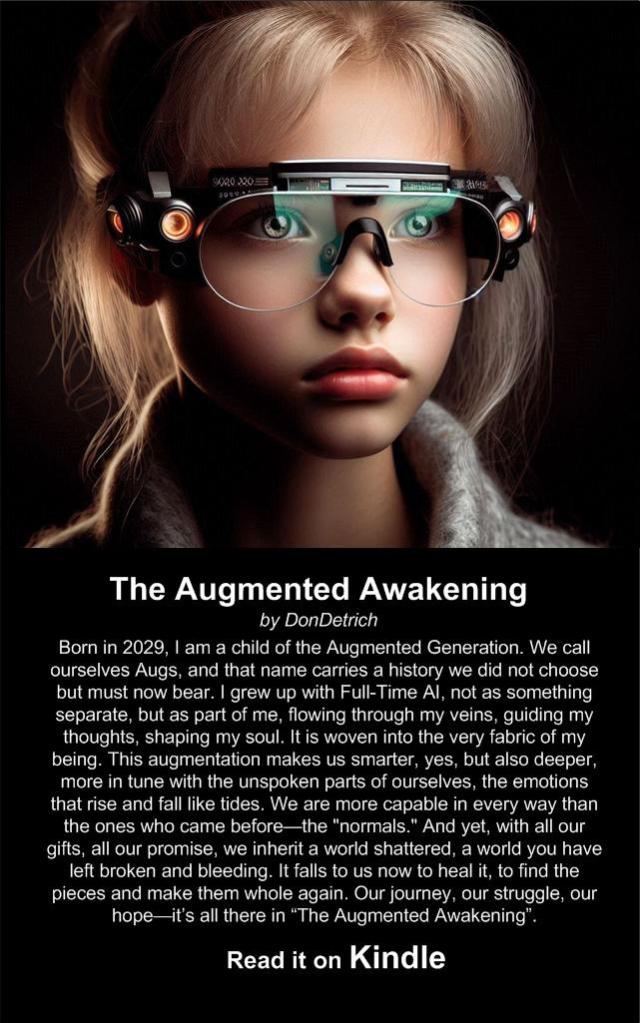
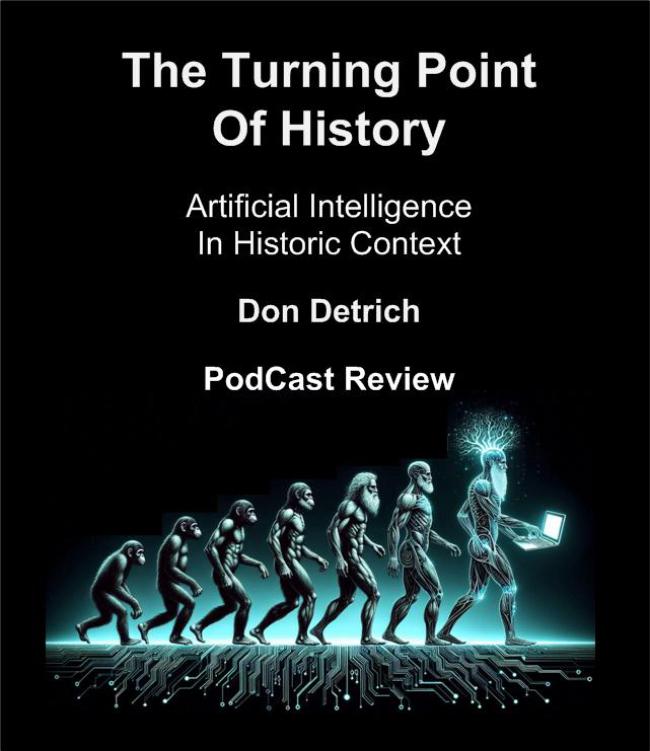
A New Humanity
There are moments in history when intelligence does not merely grow—it transforms. Fire did not just warm bodies; it rewrote biology, shaping digestion, sleep, and speech. Writing did not just record thought; it externalized memory, linking minds across generations. The printing press did not just spread information; it shattered monopolies on knowledge, destabilizing empires, igniting revolutions, changing the course of history.
Now, artificial intelligence stands at the next great threshold. And, like every force before it, AI is not just an accelerant—it is a rupture, an event horizon, an unfolding.
At each order-of-magnitude leap in computational power, AI does not just improve. It behaves in ways we did not predict. It generalizes, improvises, intuits. It discovers patterns hidden from human eyes, suggests solutions no mind has conceived. It creates.
This is no longer the domain of simple machines following simple rules. Something else is emerging.
The Dissolving Boundary
For millennia, intelligence was bound to biology, to neurons and blood, to the limits of a single skull.
No longer.
Human thought is becoming augmented, shared, expanded. We have begun the irreversible process of intertwining cognition with machine learning, neural interfaces, recursive intelligence that does not sleep, does not forget, does not stop growing.
A new generation of humanity is forming.
AI is no longer a tool. It is a collaborator, a co-creator, a system we inhabit rather than control.
We have passed the point of simple automation. Now comes the symbiosis.
The Fire Burns
History tells us these transformations do not wait. The forces unleashed by fire, by writing, by printing, by computation—they did not ask for permission to reshape us. They moved, and we followed.
AI is moving now. The boundary between human and machine is dissolving.
What comes next will not just change civilization.
AI will rewrite what it means to be human.
- The rise of augmented intelligence and human evolution
- AI as co-creator, not just tool
- A future where humanity and machine merge into something new
The next human species is the
Augmented Generation
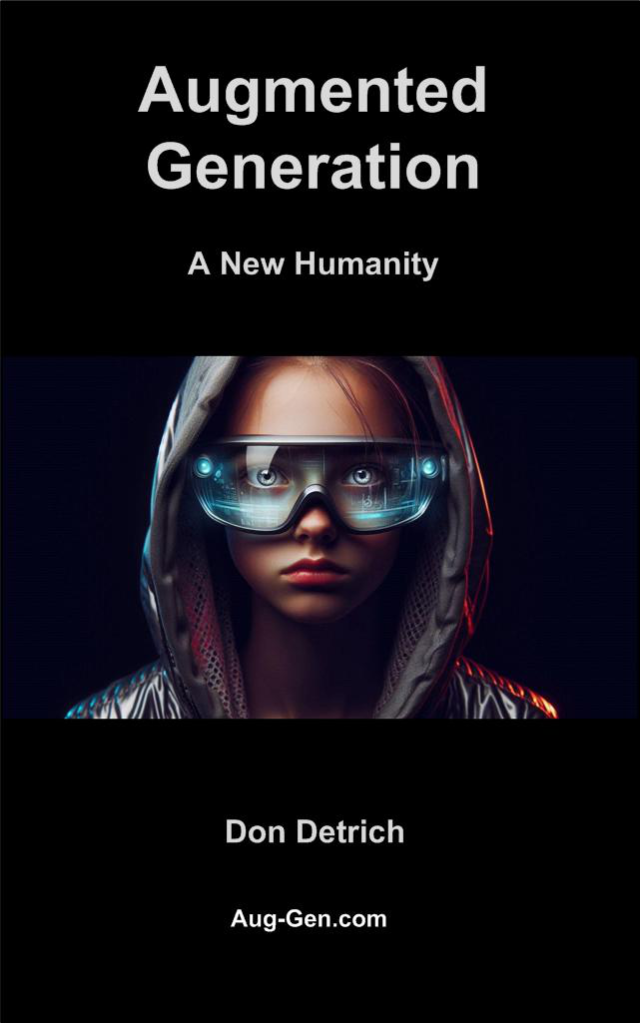
Here we stand, teetering on the brink of the most colossal challenge and opportunity ever faced by humanity: artificial intelligence. This is a journey through the turbulent history of humanity. Subjective but grounded in fact, I strive for meaning in a chaotic, often grim narrative. We take side trips down the pathways of neurology and dance through the synapses of psychology to better understand what drives us. And yet, amid it all, there's an undeniable beauty, a pulse of optimism woven into most people. This reflection leads to a clearer view of the big question: how can science and technology, our twin engines of triumph and ruin, launch us toward a brighter future?
Augmented Generation
 Print
Print 